
Are you tired of expensive gym memberships and complicated workout equipment? Imagine sculpting your body and boosting your fitness without ever leaving the comfort of your home.
The secret? A bodyweight workout routine tailored just for you. This guide will show you how to harness the power of your own body to achieve incredible results. Whether you’re a beginner or looking to shake up your current routine, this simple approach can transform the way you think about fitness.
Curious about how you can get started and see real progress? Keep reading to discover the step-by-step process that will help you build strength, improve flexibility, and elevate your overall well-being—all without the need for any fancy gear. Your journey to a fitter, healthier you begins right here.
Benefits Of Bodyweight Training
Bodyweight training offers a unique set of benefits that make it an excellent choice for anyone looking to improve their fitness. It uses your own body as resistance, allowing you to build strength and flexibility without relying on machines or weights. This approach makes workouts accessible, effective, and easy to fit into any lifestyle.
Improved Strength And Flexibility
Bodyweight exercises engage multiple muscle groups at once, helping you build balanced strength across your body. Movements like push-ups, squats, and planks not only increase muscle power but also improve joint mobility and flexibility.
When I started focusing on bodyweight routines, I noticed my flexibility improved alongside my strength, making everyday tasks easier and reducing discomfort. Could your routine benefit from combining strength with flexibility?
No Equipment Needed
One of the biggest advantages is that you don’t need any special equipment. You can train anywhere—your living room, a park, or even a hotel room.
This freedom means you can stick to your workouts without excuses. Have you ever missed a gym session because you forgot your gear? Bodyweight training eliminates that problem completely.
Adaptable For All Fitness Levels
Bodyweight exercises can be modified to suit beginners or challenge advanced athletes. You can start with wall push-ups and gradually move to one-arm push-ups as you get stronger.
This adaptability keeps you motivated and prevents plateaus. What small adjustments can you make today to push your limits safely?
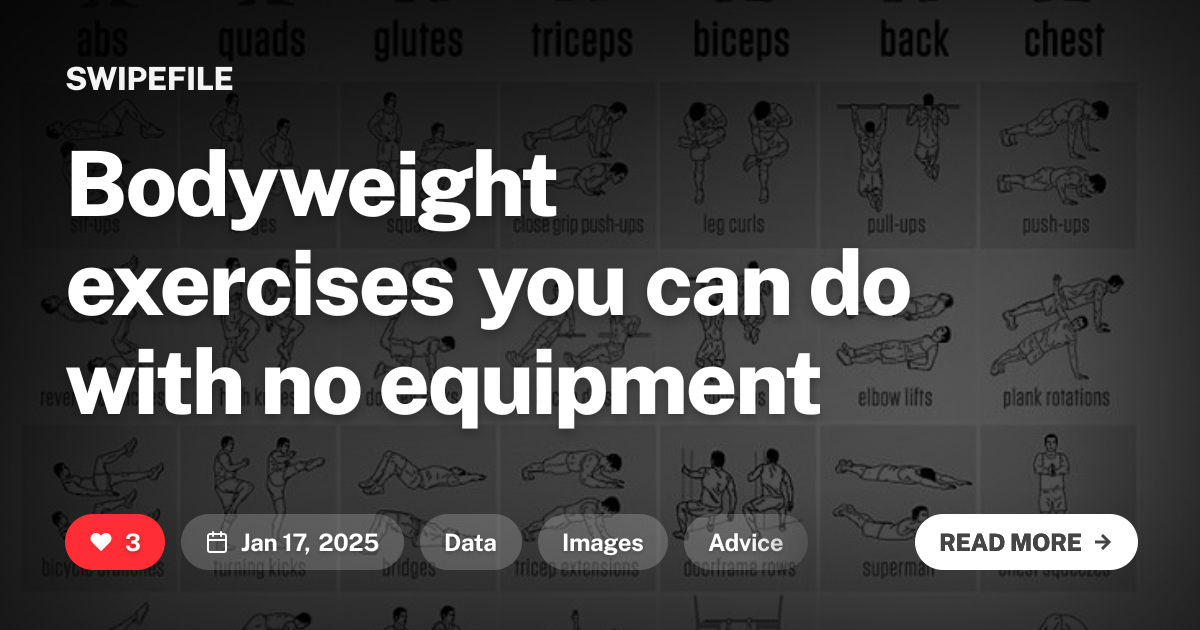
Credit: swipefile.com
Key Principles For Effective Workouts
Building an effective bodyweight workout routine requires understanding key principles. These principles ensure your workouts bring results and keep you motivated. Focus on gradual improvement, correct movements, and regular practice. This approach helps your body adapt and grow stronger safely.
Progressive Overload
Progressive overload means increasing workout difficulty over time. It pushes your muscles to work harder and grow stronger. You can increase reps, sets, or reduce rest time. Changing exercise variations to harder forms also helps. Small challenges added consistently lead to steady progress.
Proper Form And Technique
Good form protects your body from injury. It makes exercises more effective by targeting the right muscles. Focus on controlled movements and steady breathing. Avoid rushing or using momentum. Practice each move slowly until it feels natural and smooth.
Consistent Scheduling
Regular workouts build habit and improve fitness. Set specific days and times for your sessions. Consistency helps your body adapt and recover well. Even short sessions done often beat long, irregular workouts. Keep a simple routine to stay on track and motivated.
Essential Bodyweight Exercises
Building a solid bodyweight workout routine starts with mastering a set of essential exercises. These moves target different muscle groups and help you develop balanced strength without needing any equipment. Focusing on these exercises can improve your form, boost your confidence, and keep your workouts effective and engaging.
Push Movements
Push exercises work your chest, shoulders, and triceps. Classic push-ups are a great place to start because you can easily adjust their difficulty.
- Standard Push-up:Keep your body straight and lower yourself until your chest nearly touches the ground.
- Incline Push-up:Place your hands on a raised surface to reduce the load, perfect for beginners.
- Diamond Push-up:Form a diamond shape with your hands to target your triceps more intensely.
Have you noticed how slight changes in hand placement can shift the focus to different muscles? Experiment with these variations to find what challenges you the most.
Pull Movements
Pulling motions engage your back, biceps, and forearms. While bodyweight pull exercises can be trickier without equipment, there are smart ways to work these muscles.
- Inverted Rows:Use a sturdy table or bar to pull your chest up, keeping your body straight.
- Towel Rows:Loop a towel around a door handle and pull yourself toward it, controlling the movement carefully.
- Superman Holds:Lie on your stomach and lift arms and legs simultaneously to strengthen your lower back.
Pull exercises often require creativity. What household items can you use safely to add pulling motions to your workout?
Lower Body Exercises
Strong legs and glutes form the foundation of your bodyweight routine. These exercises build power and stability.
- Squats:Keep your feet shoulder-width apart and lower your hips back and down.
- Lunges:Step forward and bend both knees to 90 degrees, then push back to standing.
- Glute Bridges:Lie on your back, push through your heels, and lift your hips off the ground.
Notice how controlling your movement tempo affects muscle engagement? Slowing down your squats can make a big difference.
Core Strengtheners
Your core stabilizes every movement. Strengthening it helps improve posture and prevents injuries.
- Plank:Hold a straight line from head to heels, keeping your core tight.
- Leg Raises:Lie on your back and lift your legs slowly without letting your lower back arch.
- Bicycle Crunches:Alternate touching your elbow to the opposite knee in a controlled twisting motion.
Have you tried timing your planks or adding leg raises to challenge your endurance? These small tweaks can push your core strength further.

Credit: www.amazon.ca
Designing Your Routine
Designing a bodyweight workout routine takes thought and planning. The right structure helps you stay motivated and see progress. Focus on clear steps to build a balanced and effective plan. Keep your routine simple, flexible, and aligned with your fitness needs.
Setting Clear Goals
Start by defining what you want to achieve. Goals guide your workout choices and keep you focused. Decide if you want to build strength, improve endurance, or increase flexibility. Make your goals specific and measurable, such as doing 20 push-ups or holding a plank for one minute. Write them down and review regularly.
Choosing Exercise Variations
Pick exercises that fit your goals and skill level. Bodyweight workouts offer many options like squats, lunges, push-ups, and planks. Change variations to target different muscles and avoid boredom. For example, try diamond push-ups or wide-arm push-ups. Include movements for upper body, lower body, and core.
Balancing Volume And Intensity
Find the right mix of how much and how hard you exercise. Volume means the total number of sets and reps. Intensity relates to how challenging each movement is. Start with moderate volume and intensity to avoid injury. Increase reps or try harder variations as you get stronger. Rest between sets to recover properly.
Sample Workout Plans
Sample workout plans help you get started and stay consistent. They show clear steps to follow. These plans suit different fitness levels. Choose one that fits your current strength and skills. Regular practice will improve your endurance and muscle tone.
Below are three workout routines. Each routine targets full body strength using bodyweight exercises. They balance effort and rest to avoid burnout. Follow the routine that matches your experience.
Beginner Routine
- 10 squats
- 5 push-ups (knee or wall if needed)
- 15-second plank
- 10 glute bridges
- 20 jumping jacks
- Rest for 30 seconds
- Repeat 2 to 3 times
Intermediate Routine
- 15 squats
- 10 push-ups
- 30-second plank
- 15 glute bridges
- 25 jumping jacks
- 10 lunges (each leg)
- Rest for 30 seconds
- Repeat 3 to 4 times
Advanced Routine
- 20 jump squats
- 15 push-ups
- 45-second plank
- 20 glute bridges
- 30 jumping jacks
- 15 lunges (each leg)
- 10 burpees
- Rest for 30 seconds
- Repeat 4 to 5 times
Tracking Progress And Adjustments
Tracking your progress and making adjustments are crucial parts of building an effective bodyweight workout routine. Without monitoring how you improve, it’s easy to lose motivation or miss signs that your workout needs a change. Keeping an eye on your gains helps you stay focused and ensures steady improvement over time.
Monitoring Strength Gains
Keep a workout journal or use a fitness app to record the number of reps, sets, and how challenging each exercise feels. Tracking these details lets you see clear evidence of your growing strength. For example, if you started with 10 push-ups and now can do 20, that’s a sign your muscles are getting stronger.
Pay attention to how your body feels during exercises too. Are you completing moves with better form or less fatigue? These small improvements are just as important as hitting new rep counts. Asking yourself, “Am I pushing myself enough today?” can help maintain progress.
Modifying Exercises
As you get stronger, some exercises will become too easy or stop challenging your muscles effectively. That’s your cue to change them up. You might add variations like elevated feet push-ups or one-leg squats to increase difficulty.
Don’t hesitate to scale exercises down if you find yourself struggling with form. For example, if full pull-ups are tough, try negative pull-ups or assisted versions. Adjusting exercises keeps your routine safe and effective, preventing injuries while pushing your limits.
Overcoming Plateaus
Plateaus happen when your progress stalls despite regular workouts. It’s frustrating but also a signal to rethink your routine. Changing the order of exercises, increasing workout frequency, or adding short bursts of high-intensity moves can break through these barriers.
Sometimes rest is the best adjustment. Giving your body time to recover can jumpstart your gains again. Have you noticed moments where pushing harder didn’t help, but resting did? Recognizing when to push and when to pause is key to continuous improvement.
Nutrition And Recovery Tips
Building a bodyweight workout routine goes beyond just the exercises you perform. Your nutrition and recovery play a crucial role in how effectively your body adapts and grows stronger. Paying attention to what you eat and how you recover can transform your results and keep you motivated over the long haul.
Fueling For Strength
Your muscles need the right fuel to repair and grow after workouts. Focus on eating enough protein daily—think lean meats, beans, or dairy—to support muscle recovery. Don’t forget carbohydrates, which provide the energy to power through your exercises.
Hydration is often overlooked but essential. Drinking water before, during, and after your routine helps maintain performance and prevents fatigue. Have you noticed how a simple glass of water can make your workout feel easier?
Importance Of Rest
Rest days are not just breaks—they’re when your body rebuilds stronger. Skipping rest can lead to burnout or injury, slowing down your progress. Aim for at least one or two full rest days a week, and listen closely to how your body feels.
Quality sleep is a powerful recovery tool. Try to get 7-9 hours each night, as this is when your body releases growth hormones and repairs muscle tissue. Could adjusting your bedtime routine boost your workout gains?
Stretching And Mobility
Stretching after your workouts helps reduce muscle tightness and improve flexibility. Spend 5-10 minutes focusing on major muscle groups you worked on, using gentle static stretches. This simple habit can prevent soreness and improve your range of motion.
Mobility exercises, like joint circles or dynamic leg swings, prepare your body for movement and reduce the risk of injury. Adding these to your warm-up can make your bodyweight exercises feel smoother and more controlled. How often do you include mobility work in your routine?
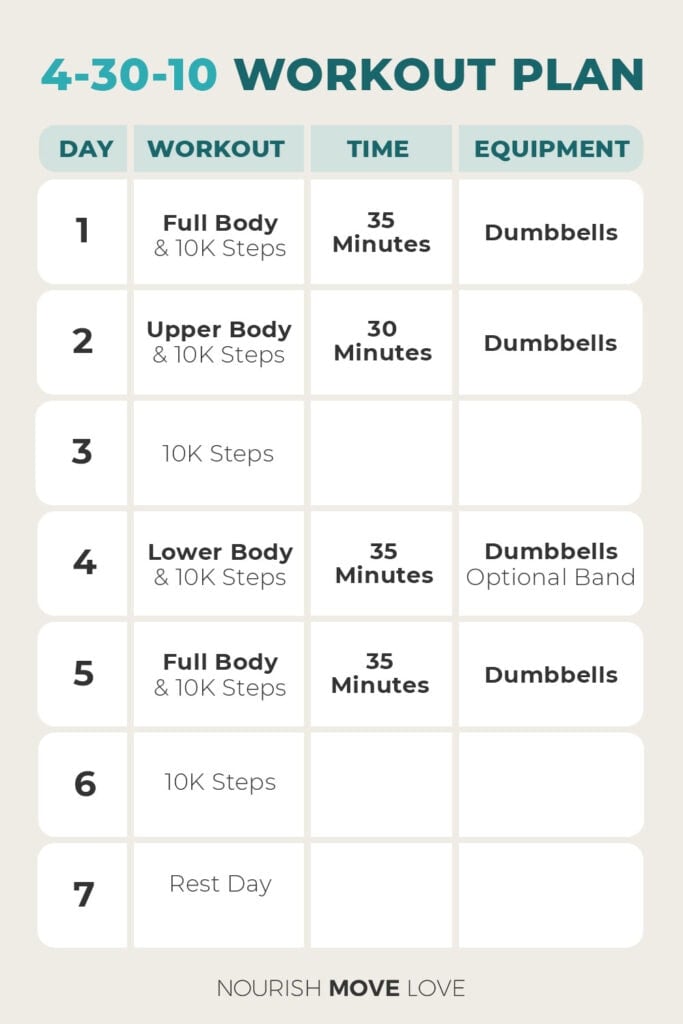
Credit: www.nourishmovelove.com
Frequently Asked Questions
What Are The Basics Of A Bodyweight Workout Routine?
A bodyweight workout routine uses your own weight for resistance. It improves strength, flexibility, and endurance without equipment. Basic exercises include push-ups, squats, planks, and lunges. Consistency and proper form are key for effectiveness and safety.
How Often Should I Do Bodyweight Workouts Weekly?
Aim for 3 to 5 sessions per week. This frequency balances muscle recovery and progress. Beginners may start with 2 to 3 days, gradually increasing as strength improves. Always listen to your body to avoid overtraining.
Can Bodyweight Workouts Build Muscle Effectively?
Yes, bodyweight exercises can build muscle with proper progression. Increasing reps, sets, or exercise difficulty challenges muscles. Combining strength and endurance training boosts muscle tone and size. Consistent effort and balanced nutrition support muscle growth.
How Do I Structure A Full Body Bodyweight Routine?
Include exercises targeting major muscle groups: legs, chest, back, core, and arms. Start with a warm-up, then perform 2-3 sets of each exercise. Rest 30-60 seconds between sets. End with a cool-down stretch to improve flexibility.
Conclusion
Building a bodyweight workout routine takes time and patience. Start with simple exercises and increase difficulty slowly. Consistency matters most for seeing real progress. You can exercise anywhere without special equipment. Keep your goals clear and track your progress. Stay motivated by mixing different moves each week.
Remember, small steps lead to big changes. Enjoy the journey and feel your strength grow.